


Xuanzhu Biopharma announced that the first-line indication of its independently developed CDK2/4/6 inhibitor Piroxiclib tablets has officially been included in the national medical insurance payment scope. With medical insurance access for multi-line indications, the drug achieves full medical insurance coverage for advanced breast cancer from first-line to second-line and later-line treatment.
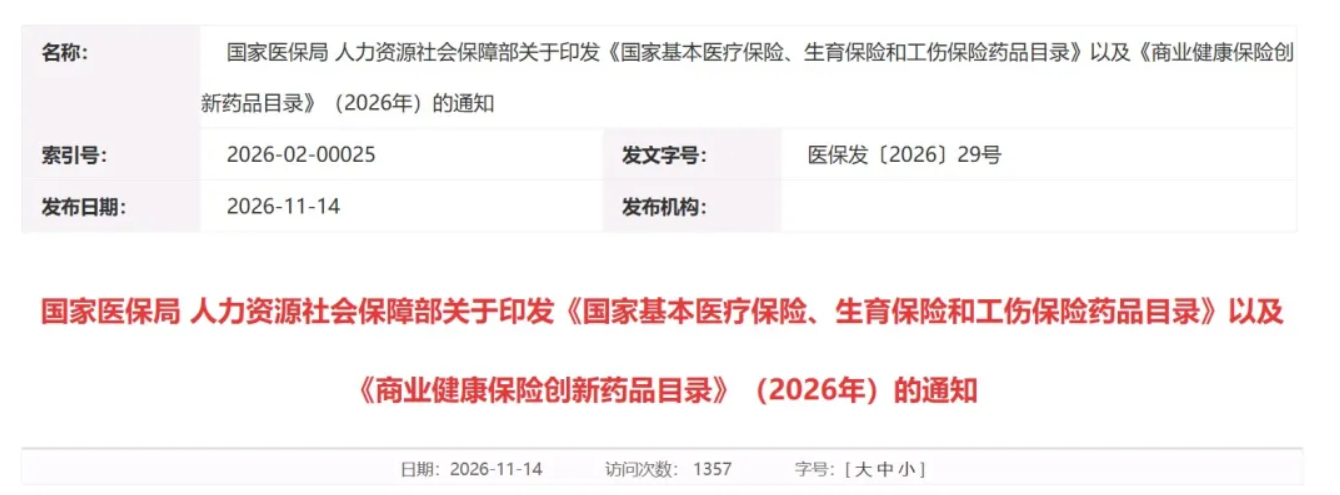

The inclusion of its first-line indication in medical insurance means that for HR+/HER2- advanced breast cancer patients, from initial endocrine therapy to subsequent treatment after endocrine progression, and then to single-agent salvage after failure of multiple lines of treatment, at every key treatment node, there is now a medically insured and accessible oral CDK2/4/6 inhibitor option.
01 Full-Course Medical Insurance, Clinically Supported
HR+/HER2- accounts for about 70% of all breast cancers and is the largest molecular subtype population. CDK4/6 inhibitors combined with endocrine therapy have become the standard first-line regimen for advanced disease, significantly prolonging patient survival. However, the establishment of standard treatment does not equal accessibility across the full course of treatment; Piroxiclib has solid evidence-based support throughout the full course.
First-line: BRIGHT-3 study, combined with AI significantly reduces the risk of disease progression
In previously untreated patients with HR+/HER2- advanced breast cancer, Piroxiclib combined with letrozole/anastrozole versus placebo combined with endocrine therapy: at a median follow-up of 20.7 months, the investigator-assessed mPFS in the Piroxiclib group had not yet been reached, versus 18.43 months in the control group, with the risk of disease progression or death reduced by 47% (HR=0.53). The objective response rate reached 63.5%, significantly better than 42.5% in the control group. In the liver metastasis subgroup with worse prognosis, the risk of disease progression was reduced by 64% (HR=0.36), suggesting that first-line benefit is not limited to the general-risk population.
Second-line: BRIGHT-2 study, combined with fulvestrant doubles PFS
Results assessed by independent central imaging (BICR) showed that the median PFS in the Piroxiclib group reached 17.5 months (95% CI: 13.8-23.1), compared with 7.3 months (95% CI: 5.5-9.5) in the control group, with a hazard ratio as low as 0.47 (95% CI: 0.34-0.65, P<0.001). The results were published in JAMA Oncology.
Later-line: BRIGHT-1 study, monotherapy brings long-term survival benefit in a highly refractory population
Among enrolled patients, 85.5% had received ≥3 lines of treatment and 84.7% had visceral metastases. Piroxiclib monotherapy still achieved a median PFS of 11.0 months, a median OS of as long as 29.0 months, and an IRC-assessed ORR of 29.8%. This is currently the only monotherapy later-line indication among domestic CDK4/6 inhibitors, providing an oral, accessible, chemotherapy-free option for patients who lack standard regimens after failure of multiple lines of treatment.
For advanced patients who need continuous treatment from first-line to later-line, an oral CDK2/4/6 inhibitor that mechanistically balances sustained tumor suppression with long-term tolerability enables patients to have a drug available and a regimen to continue with throughout the entire course, truly completing the full course of treatment.
02 Guideline Positioning, Evidence-Based
In the treatment landscape of HR+/HER2- advanced breast cancer, CDK4/6 inhibitors combined with endocrine therapy are recognized as the preferred first-line strategy. The guideline positioning obtained by Piroxiclib in 2026 further clarifies individualized recommendations on top of this class consensus.
The CSCO Breast Cancer Diagnosis and Treatment Guidelines 2026 established the CDK2/4/6 inhibitor category for the first time and included Piroxiclib in this category's recommendations, distinguishing it from traditional CDK4/6 inhibitors and giving it an independent mechanistic positioning. The Chinese Anti-Cancer Association Breast Cancer Diagnosis and Treatment Guidelines and Standards (2026 Edition) also included Piroxiclib and listed it as a core standard treatment drug for advanced HR+/HER2- breast cancer. The National Health Commission's Guiding Principles for the Clinical Application of Novel Anti-Tumor Drugs (2026 Edition) included Piroxiclib and provided a dedicated introduction to its clinical use in combination with fulvestrant and as monotherapy.
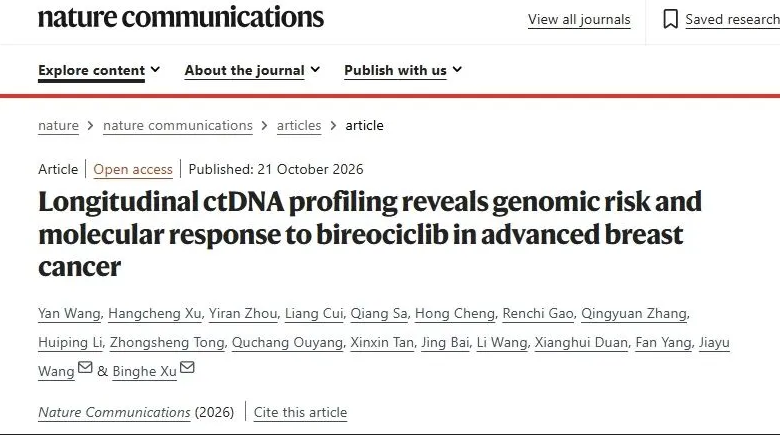
In terms of research evidence, the final analysis of the Phase III BRIGHT-2 study was published in JAMA Oncology. For Piroxiclib combined with fulvestrant in HR+/HER2- advanced breast cancer progressing after endocrine therapy, results assessed by independent central imaging (BICR) showed that median PFS reached 17.5 months (95% CI: 13.8-23.1), with a hazard ratio as low as 0.47 (95% CI: 0.34-0.65, P<0.001). On this basis, the ctDNA biomarker exploratory results of BRIGHT-2 were published online in Nature Communications in October 2026. This analysis conducted longitudinal dynamic ctDNA analysis based on BRIGHT-2 clinical samples to identify molecular features that can predict benefit from Piroxiclib treatment, helping clinical practice precisely screen benefiting populations and promoting individualized precision
and treatment of breast cancer. This translational research provides a molecular-level tool for clinical use of dynamic ctDNA monitoring of efficacy and identification of potential drug-resistant populations, extending full-course management from line-level coverage to molecular-level benefit prediction and resistance tracking.
03 Conclusion
For patients with HR+/HER2- advanced breast cancer, treatment is a long-distance run. Every treatment switch may mean a reassessment of financial affordability, or even an unaffordable interruption. After the first-line indication of Piroxiclib is included in medical insurance and full coverage from first-line to later-line is achieved, clinical focus can return more to treatment decisions themselves: at the appropriate line of treatment, for the appropriate patient, choose an evidence-supported regimen, without having to let payment capacity become the primary constraint in pathway design.
About Piroxiclib (Xuanyuening®)
Piroxiclib tablets (brand name: Xuanyuening®) are the first approved CDK2/4/6 inhibitor in China, with a multi-target synergistic mechanism covering CDK2/4/6 and CDK9. By targeting and inhibiting cyclin-dependent kinases 4 and 6 (CDK4/6) and related targets, it inhibits tumor cell proliferation and helps delay tumor progression.
While inhibiting CDK4/6, Piroxiclib synergistically inhibits CDK2 and CDK9: when CDK4/6 is blocked, tumor cells upregulate CDK2 to bypass the blockade and restore cell cycle progression, which is one of the important pathways of resistance development; simultaneous inhibition of CDK2 can suppress this escape pathway, enhance anti-tumor activity, and delay resistance. High selectivity for CDK4 inhibition (about 18 times more selective than for CDK6) concentrates proliferation blockade on the core driver pathway of breast cancer cells and reduces collateral effects on normal functions related to CDK6. Preclinical studies also suggest its potential to penetrate the blood-brain barrier, providing a mechanistically differentiated possibility for brain metastases, a clinical difficulty.
In terms of safety, Piroxiclib significantly reduces hematologic toxicities such as grade 3/4 neutropenia commonly seen with traditional CDK4/6 inhibitors, improving long-term treatment tolerability. In clinical studies, common adverse events such as diarrhea and neutropenia were mostly grade 1-2 and could be effectively managed through supportive care or dose adjustment, with overall safety controllable. Piroxiclib tablets have achieved full coverage of HR+/HER2- advanced breast cancer in first-line (combined with aromatase inhibitors for initial endocrine therapy), second-line (combined with fulvestrant after endocrine progression), and later-line (monotherapy) settings.
References
[1] National Healthcare Security Administration, Ministry of Human Resources and Social Security. National Basic Medical Insurance, Maternity Insurance, and Work Injury Insurance Drug Catalog and supplementary agreements (2026 edition).
[2] Zhang Q, et al. BRIGHT-3: A phase III trial of bireociclib plus aromatase inhibitor as first-line treatment for HR+/HER2− advanced breast cancer. 2025 ESMO, Abstract 490P.
[3] Bireociclib plus fulvestrant in advanced breast cancer after endocrine progression: BRIGHT-2 final analysis. JAMA Oncology, 2026.
[4] Xu B, et al. Bireociclib monotherapy in heavily pretreated HR+/HER2− advanced breast cancer: BRIGHT-1 phase II trial. 2026.
[5] Chinese Society of Clinical Oncology (CSCO). Breast Cancer Diagnosis and Treatment Guidelines 2026.
[6] Chinese Anti-Cancer Association. Breast Cancer Diagnosis and Treatment Guidelines and Standards (2026 edition).
-About Xuanzhu Biopharma-
Xuanzhu Biopharma (stock code: 02575.HK) is an innovative pharmaceutical company rooted in China with a global vision. It focuses on major disease areas such as digestive diseases, oncology, and metabolism, and is committed to the research and development, production, and commercialization of Class 1 new drugs with core independent intellectual property rights. As a rising commercialization-oriented innovative drug company driven by R&D and empowered by AI, the company has built a collaborative technology system integrating a small-molecule drug R&D platform, a biologic drug R&D platform, a small nucleic acid R&D platform, and an AI drug R&D platform, thereby forming a product pipeline that is rare in China in simultaneously covering multiple types such as small-molecule chemical drugs, large-molecule biologic drugs, and small nucleic acid drugs. Guided by unmet clinical needs, the company is committed to developing into a first-class innovative pharmaceutical enterprise with independent R&D, production, and sales capabilities.

9th Floor, North Tower of CP Center, No.20 Jin He East Avenue,Chaoyang District,Beijing,China
Tel:010-5765 4567
Email:XZGROUP@xuanzhubio.com
Copyright © 轩竹生物科技有限公司保留所有权利 冀ICP备2020028968号-2 网站建设技术支持:唯引互动
